News
How Material Costs Are Changing Design Decisions
When material prices and lead times change, designers have to make choices earlier and communicate them more clearly. Substitution is no longer just a question of finding a cheaper finish. It also involves durability, maintenance, repairability and the original spatial idea. Good specification now requires both creative judgment and practical flexibility.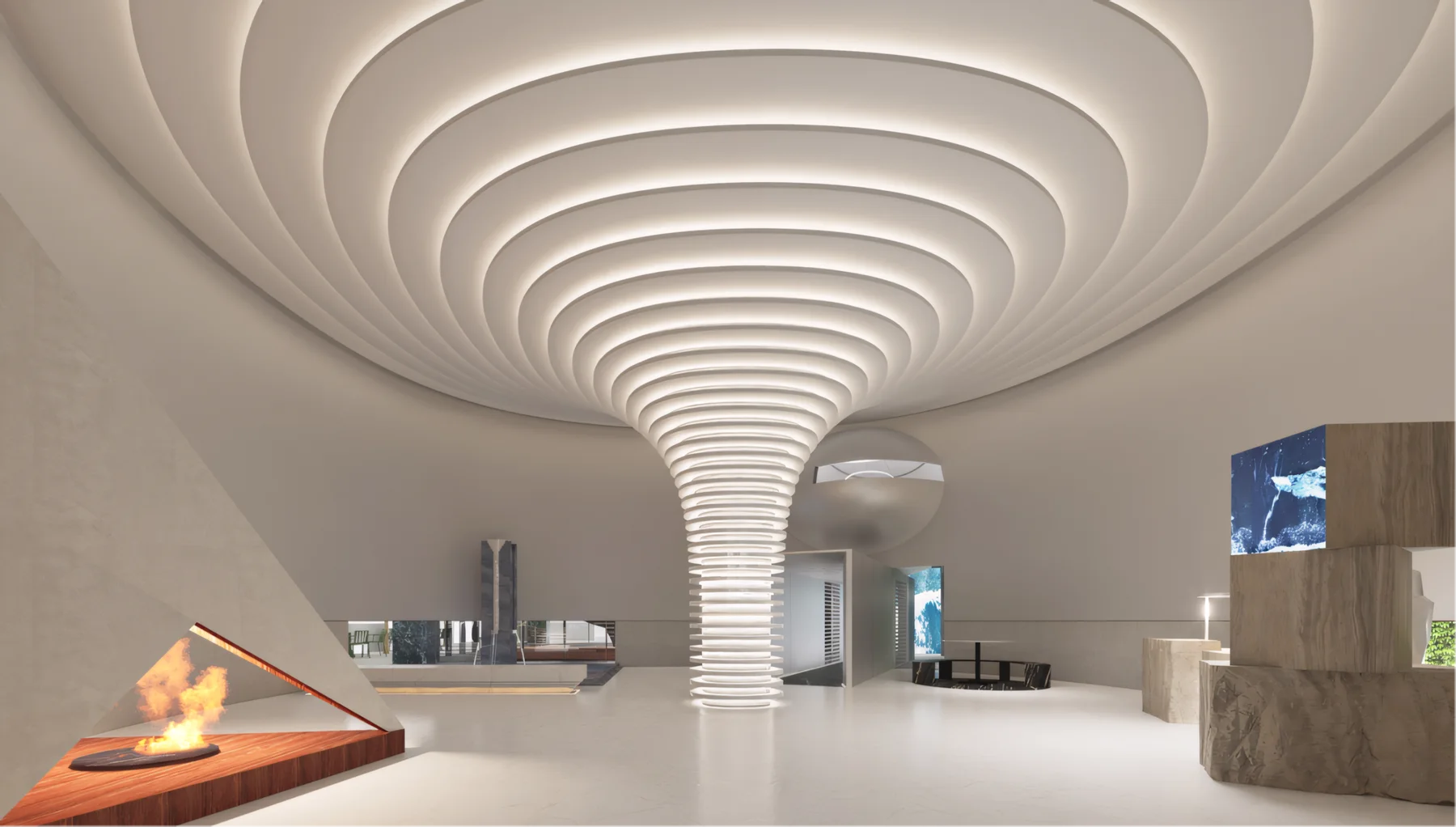
The Substitution Problem
The most consequential material decision on a project is often made after the material was supposedly selected. A price changes, a shipment is delayed, a fabric is discontinued, or an installer raises a concern. The team then reaches for a substitute. Sometimes the change is sensible. Sometimes it is presented as visually equivalent because the schedule leaves no room for a more honest conversation.
That is where material specification becomes fragile. A replacement may resemble the approved sample but differ in joint width, durability, slip resistance, acoustic behaviour, cleaning tolerance, fixing method or availability for future repair. The immediate saving can create a later maintenance burden. The more serious loss is often conceptual: a space built around a particular relationship of light, texture and scale becomes a collection of compromises no one was authorised to assess together.
Material volatility is not new, and it is not limited to any one market. What has changed is the number of conditions that now arrive in the same decision: pricing, labour, transport, tariffs, supplier capacity, batch consistency and delivery risk. Designers cannot control all of them. They can, however, stop treating material choice as a visual decision made in isolation from procurement, construction and use.
From Palette to System
A material palette is useful for establishing atmosphere. A specification system is what allows that atmosphere to reach the built project. It should make clear what a material must do, where it can vary, what evidence has been approved and what happens if the original selection becomes unavailable.
ArchDaily's guide to specifying materials — opens archdaily.com in a new tab describes the task as a balance of cost, durability, performance, aesthetics and quality. That balance sounds obvious, but it is frequently deferred until construction. The stronger approach is to separate non-negotiable criteria from negotiable attributes at the start. A wall finish may need to meet a fire rating, survive a particular cleaning routine and create a continuous light response. Its exact format, source region or secondary colour may be open to alternatives. Once that hierarchy is known, an unavoidable substitution can be judged rather than merely accepted.
The same source stresses schedules and documentation. Those can appear administrative beside a carefully drawn interior, yet they are where design intent becomes transferable. A proper material record identifies the product, sample, dimensions, finish, performance requirements, installation conditions and acceptable alternatives. It gives contractors and clients a common reference when conditions move. Without it, the person who knows why the material mattered is often the first person excluded from the replacement decision.
Cost Is Only One Form of Value
The industry's language of “value engineering” can be misleading because it often describes a reduction in first cost rather than a calculation of value. A lower-cost material may be the right answer if it performs well, can be repaired locally, shortens risk and supports the intended character. A familiar premium material may be a poor answer if it creates an unmanageable lead time or cannot be matched after a small area is damaged.
ASID's 2025 economic outlook — opens fls.asid.org in a new tab notes the combined pressure of material costs, tariffs and labour constraints on interior design practice. Earlier ASID reporting also identified supply-chain disruption and product availability as continuing professional concerns. These reports do not provide a universal procurement formula, nor should they be used to invent a price story for a particular Chinese project. Their useful lesson is simpler: cost pressure belongs in the design process early enough to be managed, not announced at the end as a reason why the intended space cannot be delivered.
Designers can help clients understand the difference by asking lifecycle questions. Who can supply the material? How many trades can install it correctly? What happens if one panel or tile fails? Is the cleaning regime realistic for the operator? Can the material be removed or repaired without destroying neighbouring work? What information must stay with the project after handover? These questions make no promise that a chosen material will be cheapest. They make it possible to understand why it may be worth choosing.
Full-Scale Evidence Matters
Material decisions are particularly vulnerable when they are made from a small sample under studio light. A finish that appears calm in the hand can become reflective, repetitive or difficult to maintain across a large wall. A tile that reads as robust can reveal an awkward joint at the threshold. A metal surface may perform beautifully in a photograph and poorly in a busy environment.
Designboom's reporting on the Neolith headquarters showroom — opens Designboom in a new tab is relevant not as a product endorsement, but because it presents material applications at architectural scale. Floors, walls, counters and exterior conditions make a surface easier to judge in use. That is the discipline project teams need when comparing an approved material with an alternative: test it at the scale, under the light and alongside the junctions in which it will actually be encountered.
Mock-ups are sometimes treated as expendable when budgets tighten. In reality, they can be one of the least expensive ways to avoid a larger error. A focused mock-up can establish whether a substitute preserves colour depth, fixing logic, cleaning resilience and spatial effect. It can also reveal that the original specification was over-dependent on a single product and needs a more resilient system.
The China / DesignFan Perspective
China's manufacturing capability gives designers a large and responsive field of material options. That abundance does not remove the need for judgement: an alternative matters only if it protects the reason the original was selected.
The Aozhuosi Slab Showroom offers a clear DesignFan reference because large-format surfaces are seen in full applications rather than reduced to a swatch. Visitors can read proportion, reflectance, edge conditions and the relationship between material and programme. GABO Showroom & Headquarters Office offers a different lesson: the retained fabric of a former ceramics factory gives the project a material character that cannot be ordered from a catalogue. It makes the case for looking first at what already exists before importing another layer.
Shunhui Slab Showroom and CB Metalwork Showroom are equally useful reminders that materials communicate through sequencing, detail and use. Their relevance is not that a designer should select a slab or metal product because a showroom displays it well. It is that presentation at real scale makes technical and aesthetic questions visible before they become site problems.
An Editorial Method for Specification
For DesignFan, a responsible specification has five parts: the intended spatial role of the material; the required performance; an approved full-scale reference; two viable alternatives tested against the same criteria; and a maintenance and replacement note. This framework does not remove creativity. It gives creativity a better chance of surviving procurement.
It also makes client communication more candid. A designer can say, “This is the feature that carries the room's light and rhythm; these are the attributes we must protect; these are the alternatives that preserve them; and this is the consequence of choosing outside that range.” The conversation moves beyond loyalty to a supplier or attachment to an image.
Editorial Conclusion
Material value is not the same as material price. Price is an immediate number; value is the combined usefulness of performance, availability, installation, repair, maintenance, character and time. A lower first cost can be good value. An expensive finish can be poor value. Neither conclusion can be made from a sample alone.
DesignFan's judgement is that material specification should be treated as a design, procurement, construction and aftercare practice at once. When a project makes those connections visible, it can adapt without losing its purpose. That is the real defence against volatility: not a promise that prices will stay still, but a design process strong enough to make changes intelligently.
AIA — opens AIA in a new tab, World Green Building Council — opens World Green Building Council in a new tab, Designboom — opens Designboom in a new tab
Sources & Further Reading
- AIAResource center: materials and practice — opens AIA in a new tabaia.org
- World Green Building CouncilEmbodied carbon resources — opens World Green Building Council in a new tabSep 23, 2019 · worldgbc.org
- DesignboomNeolith HQ showroom combines art and architecture — opens Designboom in a new tabNov 18, 2020 · designboom.com
Continue with DesignFan

DesignFan Insights