Ideas
AI Has Made Images Cheap. Can It Make Design Better?
Generative tools can turn a loose idea into a convincing image within minutes. What they cannot confirm is whether a space will work, be buildable or feel right in its setting. This essay looks at where AI can help Chinese design studios explore and communicate, and where human judgement still has to lead.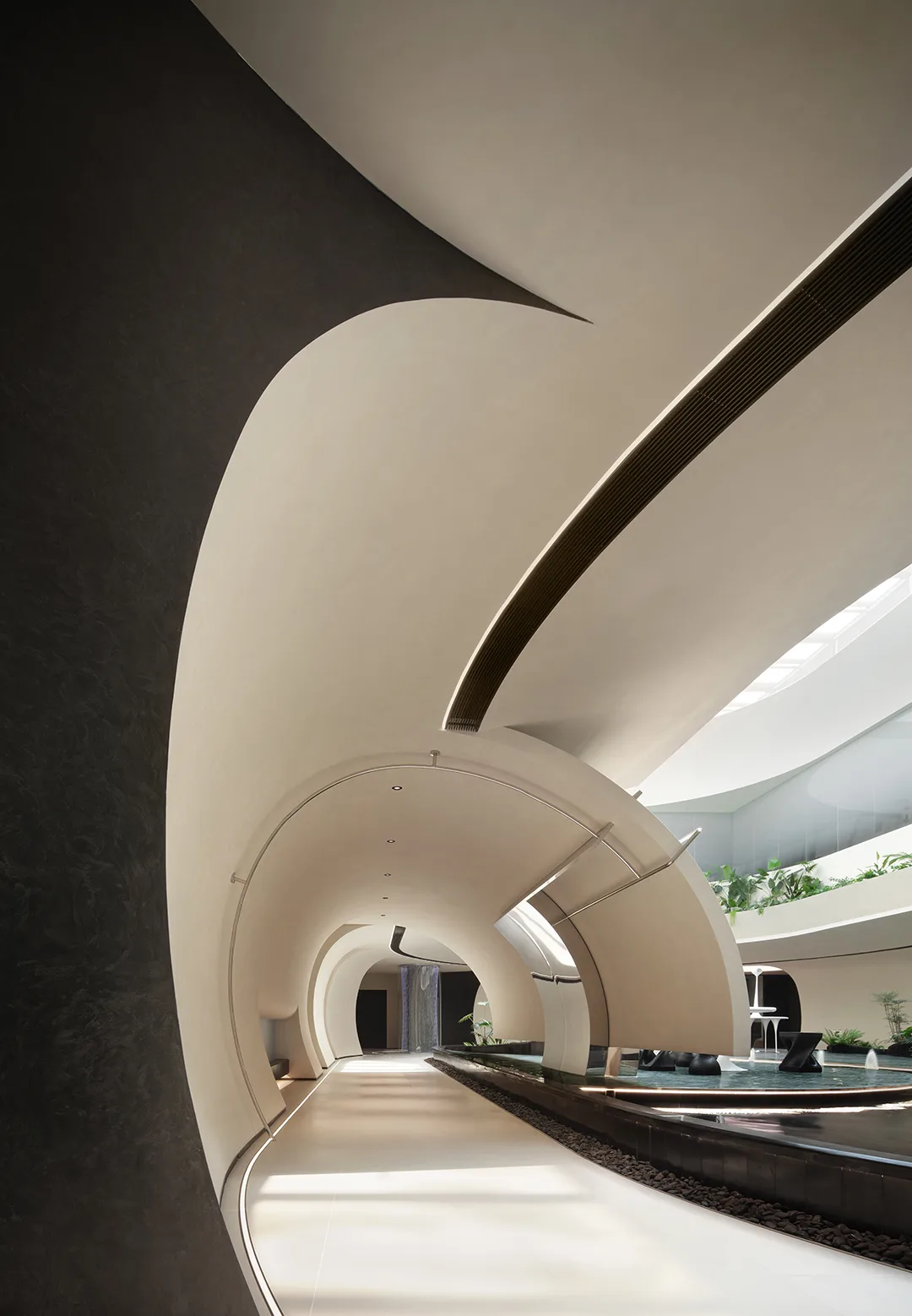
The Problem Is Not Speed
Generative tools can turn a loose sentence into a persuasive image in minutes. For a studio, that speed is useful. It can help a team compare atmospheres, open a conversation with a client who does not read plans easily, or move beyond the first reference that appears in a search. The problem is not that images arrive quickly. The problem begins when a quick image is asked to carry the authority of a resolved design.
Architecture and interiors have always used images ahead of construction. A sketch, render or collage can invite debate about light, material, scale and mood. Generative AI changes the quantity and finish of those images. A team can now produce dozens of seemingly complete rooms before a site survey, cost plan, material sample or operational brief has caught up. That visual abundance can be productive, but it also changes the pressure inside a meeting. A client may feel that an option has been promised simply because it looks finished.
The useful distinction is between a prompt for discussion and a representation of a decision. If a studio keeps that distinction visible, speed can improve exploration. If it blurs the two, speed merely makes premature certainty easier to circulate.
Exploration Is Not Representation
Exploration is allowed to be messy. A team may generate several light conditions, test a material relationship, or ask whether a reception could feel more open, more sheltered or less formal. These outputs can sit alongside physical samples, site photographs, hand sketches and programme diagrams. Their job is to provoke questions, not to close them.
Representation has a different responsibility. Once an image enters a client approval, tender package, public announcement or sales presentation, people may make commitments based on it. At that point, the studio needs to know what is shown, what is still speculative and what cannot be delivered. The NIST Generative AI Profile — opens NIST in a new tab is useful because it frames generative AI through governance and risk rather than novelty. In a design office, that translates into ordinary questions: What is this image for? Which references informed it? What could it lead a client to assume? Who has checked it against the site and brief?
Labelling is part of that discipline. A generated concept image should not be presented as a photograph, a completed project or an approved material study. The image can still be beautiful and useful; it simply needs an honest status.
What an Image Cannot Verify
An image can suggest a space that feels plausible while concealing the decisions that make a room work. It cannot confirm that a corridor has enough width when people carry samples or trays. It cannot show whether a reflective finish becomes distracting under the actual lighting system. It cannot prove that a curved wall can be built within the budget, that a stone slab is available at the illustrated scale, or that an acoustic lining can sit behind a perforated panel without changing the detail.
Those gaps are familiar to experienced designers because conventional renders can hide them too. Generative imagery increases the risk by making visual coherence so easy to produce. It may invent a joint, flatten a local material tradition into a generic cue, or imply a product that has not been selected. None of these faults is harmless once a visual travels into a pitch deck or social post.
The first task remains site observation. How do people arrive? Where does sound travel? Which surfaces are touched repeatedly? What does daylight do at the time the venue is busiest? Which local trades can make and repair the relevant detail? A prompt can mention context, but it cannot observe these conditions on the team’s behalf.
Chinese Studios and Built Evidence
Chinese design studios often work under rapid briefing cycles across retail, hospitality, workplaces and brand environments. Clients need communication that is immediate and legible; digital platforms reward a strong image at once. At the same time, construction conditions remain specific. Material availability changes, mock-ups settle arguments, contractors interpret drawings under pressure, and brand identities need to survive contact with real operations.
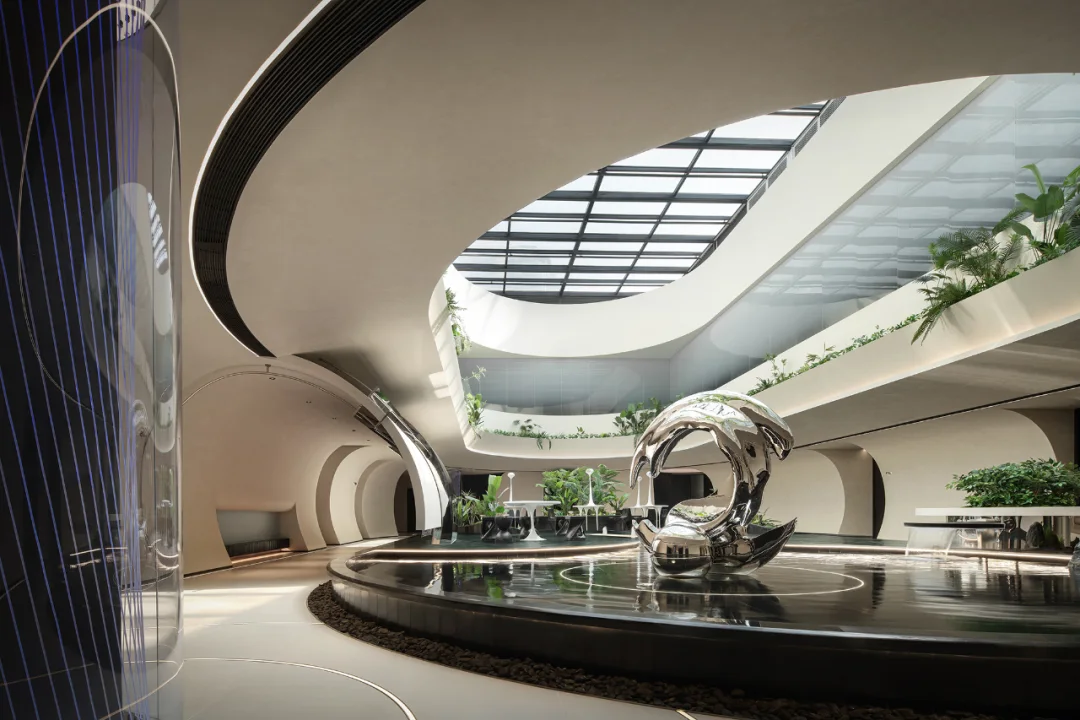
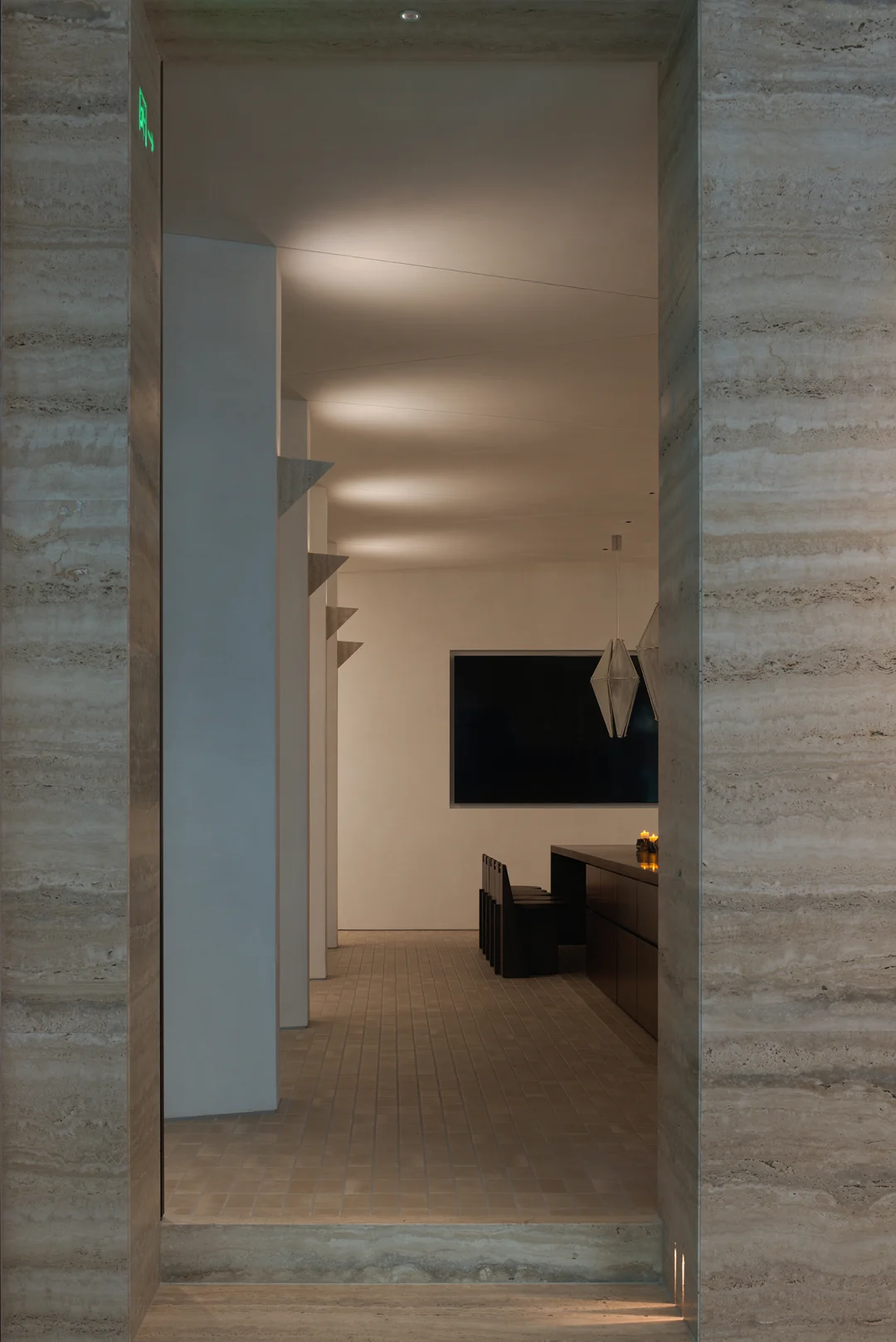
Material Gene Institute in Dongguan is a useful built reference. Its curved circulation, planted light, reflective surfaces and institutional atmosphere are the result of a real spatial sequence, not a generic “future laboratory” prompt. The photograph used with this article shows a completed DesignFan project; it is not AI-generated imagery. A generated image might help a team compare atmospheric directions before design development. It cannot establish whether the route feels generous, whether the material holds up, or whether the details resolve in the conditions of the building.
DeepBlue Interactive Headquarters and the Aozhuosi Slab Showroom make a similar point from different programmes. Colour, IP and workplace behaviour in one case, and material scale and viewing distance in the other, need to be tested through drawings, samples and occupation. AI can widen a field of references. Built evidence must narrow it again.
A More Honest Studio Workflow
A practical workflow gives each stage a different standard.
At the start, use generative tools for exploration. Keep the outputs internal or clearly provisional. Record the broad prompt, reference direction and any external material that materially shaped the image. Ask what needs further observation rather than asking which option looks most finished.
Before client sign-off, translate the promising direction into drawings, a material board, a site check and a basic cost conversation. Mark generated images as concept material. Where a visual includes a custom object, a particular brand finish or a complex junction, state whether it is a reference, an aspiration or an approved specification.
Before publication, review authorship, rights and provenance. The U.S. Copyright Office’s AI initiative — opens U.S. Copyright Office in a new tab shows that generated outputs and training questions remain active legal and policy issues. A studio working internationally should not assume that a compelling output is free of credit or rights questions. Keep the review proportionate, but do not skip it because an image was easy to make.
Keep the Human Record
The designer’s contribution is not reduced when AI is used well. It becomes clearer. Someone still has to frame the brief, decide what a client should see, observe the site, choose between conflicting demands, test materials, coordinate consultants and accept responsibility for the built result. Those are not secondary tasks after image-making; they are the work that gives an image its meaning.
AI may make images cheap. Good judgement remains expensive because it depends on experience, attention and accountability. The most useful output from a generative session may be a sharper question for a mock-up, a clearer way to explain an unresolved option, or the decision to remove an unnecessary gesture before it becomes costly. That is where the tool can make design better.
NIST — opens NIST in a new tab, NIST — opens NIST in a new tab, U.S. Copyright Office — opens U.S. Copyright Office in a new tab
Sources & Further Reading
- NISTAI Risk Management Framework: Generative AI Profile — opens NIST in a new tabJul 26, 2024 · nist.gov
- NISTAI RMF Core — opens NIST in a new tabJan 26, 2023 · airc.nist.gov
- U.S. Copyright OfficeCopyright and Artificial Intelligence — opens U.S. Copyright Office in a new tabJan 29, 2025 · copyright.gov
- ArchDailyAI and the Built Environment: Bridging Technology, Design, and Cultural Identity — opens ArchDaily in a new tabDec 27, 2024 · archdaily.com
- ArchDailyCopyrights for Architectural Imagery in the AI Era — opens ArchDaily in a new tabJan 30, 2023 · archdaily.com
Continue with DesignFan
DesignFan Insights