Trends
Why Chinese Showrooms Are Becoming Spatial Brands
Across China’s manufacturing cities, showrooms are taking on a larger role. They are no longer simply places to display products, but spaces where brands explain their ideas, test materials and meet the people shaping future projects. We look at how this shift is changing showroom design in Foshan and the Greater Bay Area.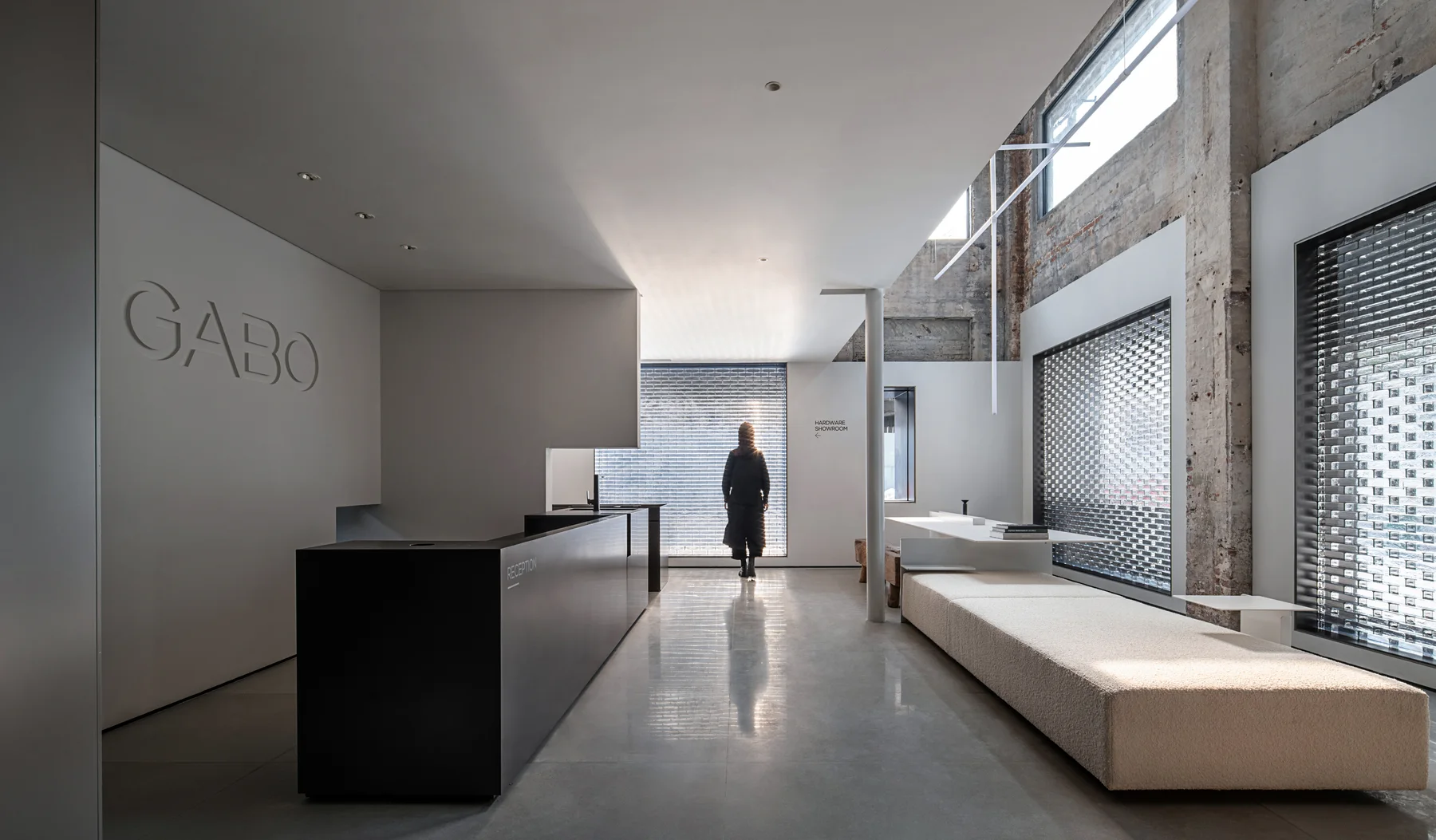
Opening problem
For years, many Chinese material and furniture showrooms solved the same brief: make the product look premium, make the route feel complete, and give visitors a memorable point for a photograph. That brief is now too small. Buyers arrive with screens full of references, technical questions, price comparisons and a shorter tolerance for theatrical display. A polished room can still open a conversation. It cannot, by itself, explain why a supplier should be trusted with a complex project.
The useful question is not whether a showroom should be experiential. It is whether the experience gives a visitor something that a catalogue, sample box or render cannot. In design-led manufacturing cities, that usually means helping architects understand tolerances and applications, helping dealers host clients, and helping a brand turn a product range into a point of view. The showroom is becoming a spatial brand: a place where a business makes its values, capabilities and relationships tangible.
What is changing
Physical retail is not simply being replaced by digital research; its job is becoming more specific. JLL's research on shifting priorities in retail design — opens JLL in a new tab argues that customers increasingly weigh convenience alongside experience. For a specification-led showroom, convenience is not a lounge or a large LED wall. It is being able to find a finish, compare it under usable light, ask a technically literate person a question, and leave with the information needed for the next decision.
That is a different model from the isolated flagship. The space must support both first impressions and repeat work. A designer might first visit for an atmosphere, return with a client to resolve a detail, then use the same address for training, launches, supplier meetings or a material workshop. The visual language therefore has to survive ordinary use. Precious, over-scripted rooms can make a brand appear less credible when a visitor needs to open a sample drawer, take measurements or discuss a delivery problem.
Research on experiential retail stores — opens Journal of the Association for Consumer Research in a new tab is helpful here because it treats the store as a site where product, service and brand meaning are encountered together. For DesignFan, the implication is practical: the strongest showroom is not a three-dimensional advertisement. It is a well-edited interface between an organisation and the people who must make decisions with it.
Why it matters
Chinese manufacturing clusters make this interface unusually consequential. Brand, factory, sample library, logistics and client hospitality can be separated by only a short drive, yet their messages are often disconnected. A showroom can close that gap. It can show how a material is made without turning production into a marketing fiction; it can make performance legible before a specification fails; and it can give overseas visitors a more precise read on a company's ambitions than a trade-fair booth permits.
The commercial case is also more disciplined than the language of “immersive experience” suggests. A programme that brings designers back for a mock-up review or a technical session creates a useful reason to occupy the space. A route that helps a dealer explain applications reduces the burden on a sales presentation. A material wall that is beautiful but impossible to update becomes an expensive image. The operational test is simple: can staff use the room to move a conversation forward?
This does not mean every showroom needs a café, event stage or museum label. In fact, those gestures can blur the offer when they are not connected to a genuine practice. The AIA resource centre — opens AIA in a new tab repeatedly frames design knowledge around real project decisions; that is the standard worth borrowing. A showroom should make a product's use, maintenance, assembly and limits easier to understand. Cultural atmosphere works best when it clarifies that evidence rather than disguising its absence.
The China / DesignFan perspective
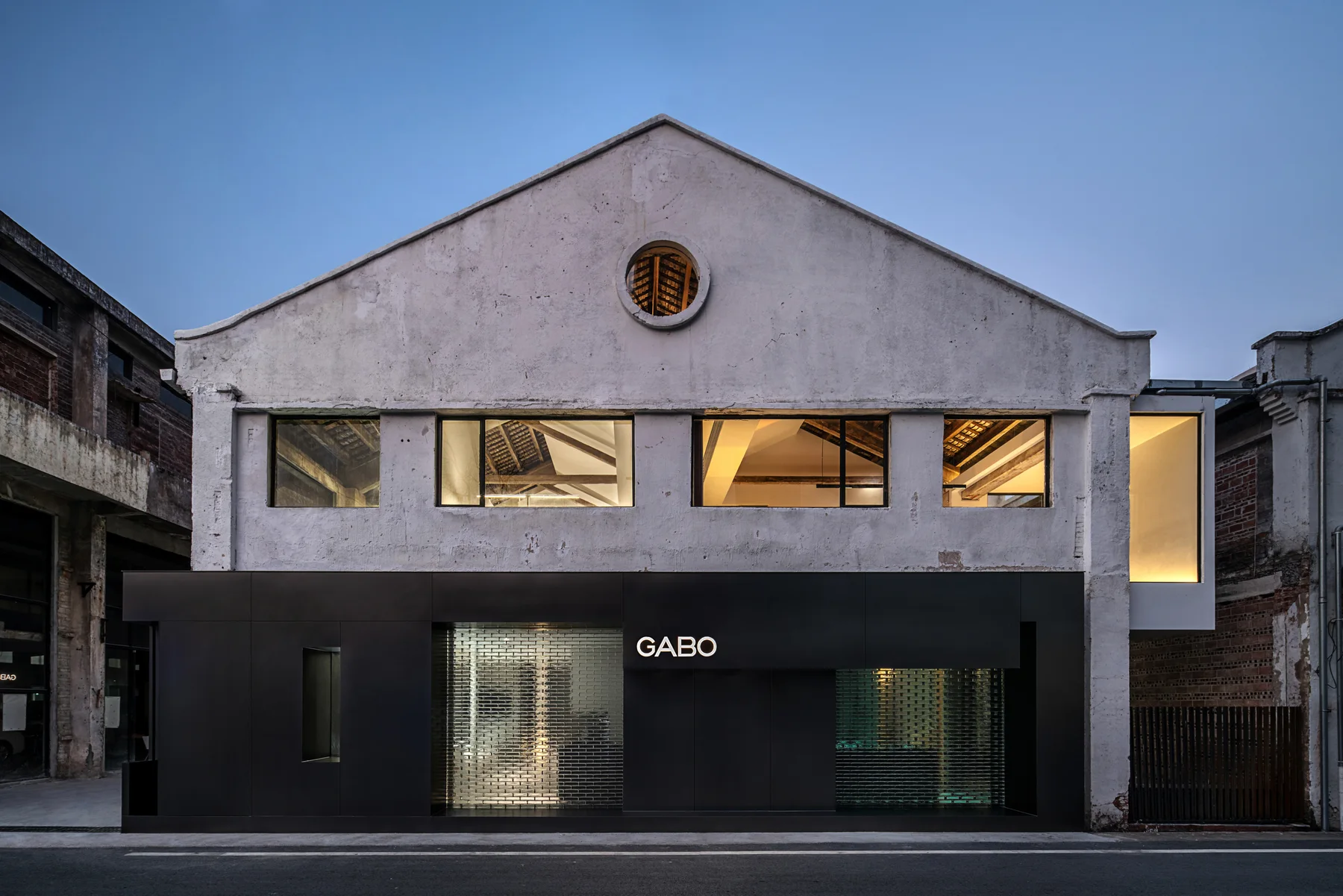
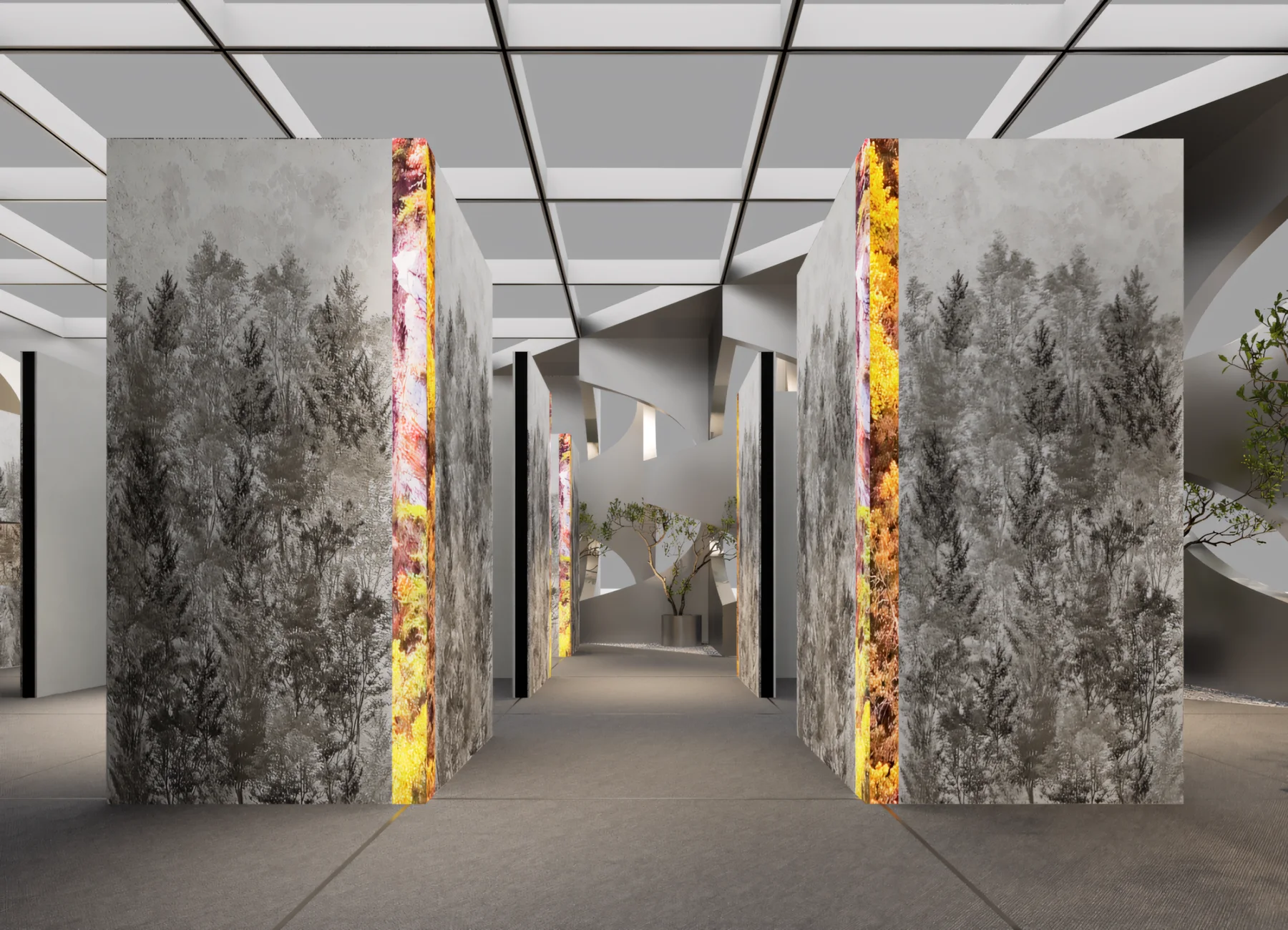
The DesignFan archive makes a useful distinction between a showroom with a concept and one with a working role. The GABO Showroom & Headquarters Office reuses a former ceramics factory rather than neutralising its industrial memory. That retained fabric matters because it gives the organisation a believable setting for a conversation about making, not just an imported luxury shell. The Wazzor Greater Bay Area Flagship Store uses sequence and product presentation to turn a systems brand into an environment that a visitor can read through movement. The Aozhuosi Slab Showroom treats surface, scale and themed scenes as part of a material experience rather than as a loose collection of sample boards.
None of these cases should be reduced to a style. Their value is in the way spatial choices create different kinds of proof. Existing structure can communicate continuity; a carefully staged opening system can demonstrate performance; a sequence of material conditions can help a client imagine use. The design decision and business claim have to stay connected.
For Chinese brands moving from supply capability to authored identity, this connection is especially important. “Spatial branding” is too often used to mean a large logo, a photogenic stair or a colour system carried across walls. Those may be useful elements, but they are not the whole brand. A brand becomes spatial when its people can host a meaningful encounter: a visitor understands what is made here, what standards guide it, who can help and what happens after the visit.
Relevant DesignFan cases
GABO suggests that adaptive character can be an asset when it is paired with a contemporary working programme. Wazzor demonstrates why circulation and demonstrable systems matter in a category that asks clients to make technical choices. Aozhuosi shows that large-format materials need scale, changing viewpoints and application context to be judged properly. Taken together, these projects point to a more useful briefing method: define the recurring conversations first, then design the scenes that help those conversations happen.
That method also changes how success is measured. Footfall and social reach have their place, but a brand should also ask: Which rooms are used for specification? Which displays are updated because they generate questions? Which visitors return with a project team? What can staff explain better here than they can in a PDF? These measures are less glamorous, and far more revealing.
Editorial conclusion
Chinese showrooms are becoming spatial brands because the product display is no longer the end of the customer journey. It is a moment inside a larger sequence of research, trust-building, technical judgement and return visits. The next generation of successful spaces will not be those that imitate the language of galleries or hospitality most convincingly. They will be the ones that make a brand's intelligence usable.
That is DesignFan's test: after the photographs are taken, does the space still help someone make a better decision? If it does, the showroom has become more than a backdrop. It has become part of the brand's operating system.
Journal of the Association for Consumer Research — opens Journal of the Association for Consumer Research in a new tab, JLL — opens JLL in a new tab, AIA — opens AIA in a new tab
Sources & Further Reading
- Journal of the Association for Consumer ResearchSelling the Extraordinary in Experiential Retail Stores — opens Journal of the Association for Consumer Research in a new tabJul 1, 2018 · journals.uchicago.edu
- JLLShifting priorities in retail design — opens JLL in a new tabOct 1, 2025 · jll.com
- AIAResource center: retail and practice resources — opens AIA in a new tabaia.org
- FRAMEPure NFTea — opens FRAME in a new tabJun 3, 2023 · frameweb.com
- DesignboomA looping showroom by Studio DOT organized around movement — opens Designboom in a new tabJan 27, 2026 · designboom.com
Continue with DesignFan


DesignFan Insights